



Why Speed Is the New Currency in Tech Hiring
Hiring in the technology sector is moving faster than many organisations are prepared for.
Across software engineering, data, and AI roles, hiring timelines now vary widely. Some candidates move from first conversation to offer within a week, while other processes stretch across several interview rounds and internal approvals.
From a hiring team’s perspective, this often reflects internal complexity. From a candidate’s perspective, it simply looks like momentum or the absence of it.
As competition for technical talent increases, the speed of hiring decisions is becoming a decisive factor in hiring outcomes. Organisations securing the strongest candidates are often not those running the most elaborate hiring processes, but those able to move with clarity and confidence when the right person appears.
The Changing Pace of the Tech Talent Market
Deloitte’s 2026 Global Human Capital Trends research highlights that organisations are under growing pressure to operate with greater speed, adaptability, and responsiveness as work and talent needs continue to evolve.
Demand for experienced engineers, AI specialists, and data professionals remains high across many technology markets. As a result, strong candidates are often evaluating several opportunities at once, shortening the window organisations have to secure them.
Hiring processes no longer unfold in isolation. While one organisation is scheduling the next interview stage, another may already be preparing an offer.
When hiring processes extend unnecessarily, organisations risk losing candidates not because the opportunity is unattractive, but because another company moved faster.
What Slow Hiring Looks Like to Candidates
From a candidate’s perspective, recruitment speed is most visible through communication.
Long gaps between interviews, delayed feedback, or unclear next steps create uncertainty. Interest in the role may remain strong, but momentum quickly fades when the process slows.
When these signals are missing, candidates often interpret the delay as organisational uncertainty.
Candidates rarely pause their job search while waiting for clarity, especially in competitive industries like tech. They continue progressing with other opportunities, which means a slow, clunky, or overly complicated hiring process can quickly result in lost talent.
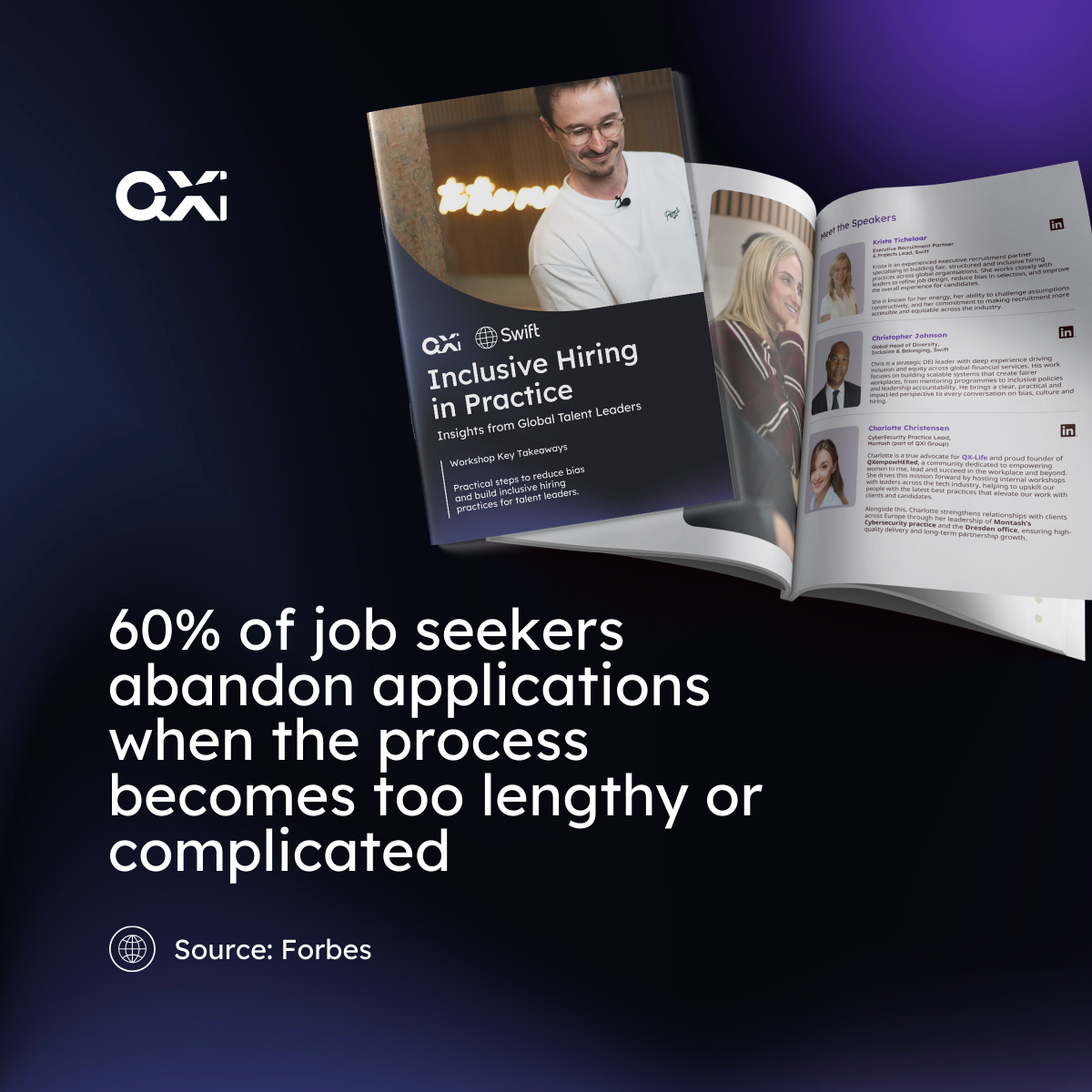
Source: Forbes
While candidates experience delays as silence or uncertainty, the causes typically lie inside organisational processes.
We explore this further in our article on today’s tech talent expectations.
Why Hiring Processes Slow Down
Hiring delays rarely happen by design. Most emerge from internal processes that were not built for speed.
Common examples include:
- Interview processes with too many stages
- Delays consolidating interview feedback
- Misalignment between hiring managers and talent teams
- Uncertainty around role requirements or decision criteria
These dynamics are understandable. Hiring decisions involve multiple stakeholders and long-term team impact. However, candidates do not see these internal discussions. What they see is the pace of communication and the structure of the process.
Efficient hiring does not mean rushed decisions. Clear timelines, prompt feedback, and decisive action signal that an organisation understands its hiring priorities.
Hiring Velocity Is a Strategic Advantage
The companies consistently securing top talent approach recruitment differently. They treat it as a strategic, business-critical function requiring alignment, clarity, and decisive action.
Hiring velocity refers to how efficiently an organisation moves candidates through each stage of decision-making. While metrics such as time-to-hire measure the duration of the process, hiring velocity reflects how effectively teams maintain momentum from first conversation to final decision.
For candidates, the recruitment process often acts as an early indicator of how a company operates internally.
High-performing organisations typically share several characteristics:
- Clear role definition before the search begins
- Alignment on evaluation criteria across stakeholders
- Streamlined interview structures
- Prompt feedback loops after each stage
When these elements are clear from the start, the process moves faster and decisions become more confident.
For leaders responsible for talent, improving speed is not about rushing decisions but removing unnecessary friction so the organisation can act decisively when the right candidate appears.
Reflect on your current hiring process.
Where do delays occur?
What decisions could be made earlier?
Organisations that address these questions are far better positioned to secure the technical talent they need.
Learn more about improving hiring practices in QXi’s SWIFT Whitepaper: Inclusive Hiring in Practice
The best people in technology. QXi provides a platform for career growth. We champion uniqueness and unite our people through their common goals and values.